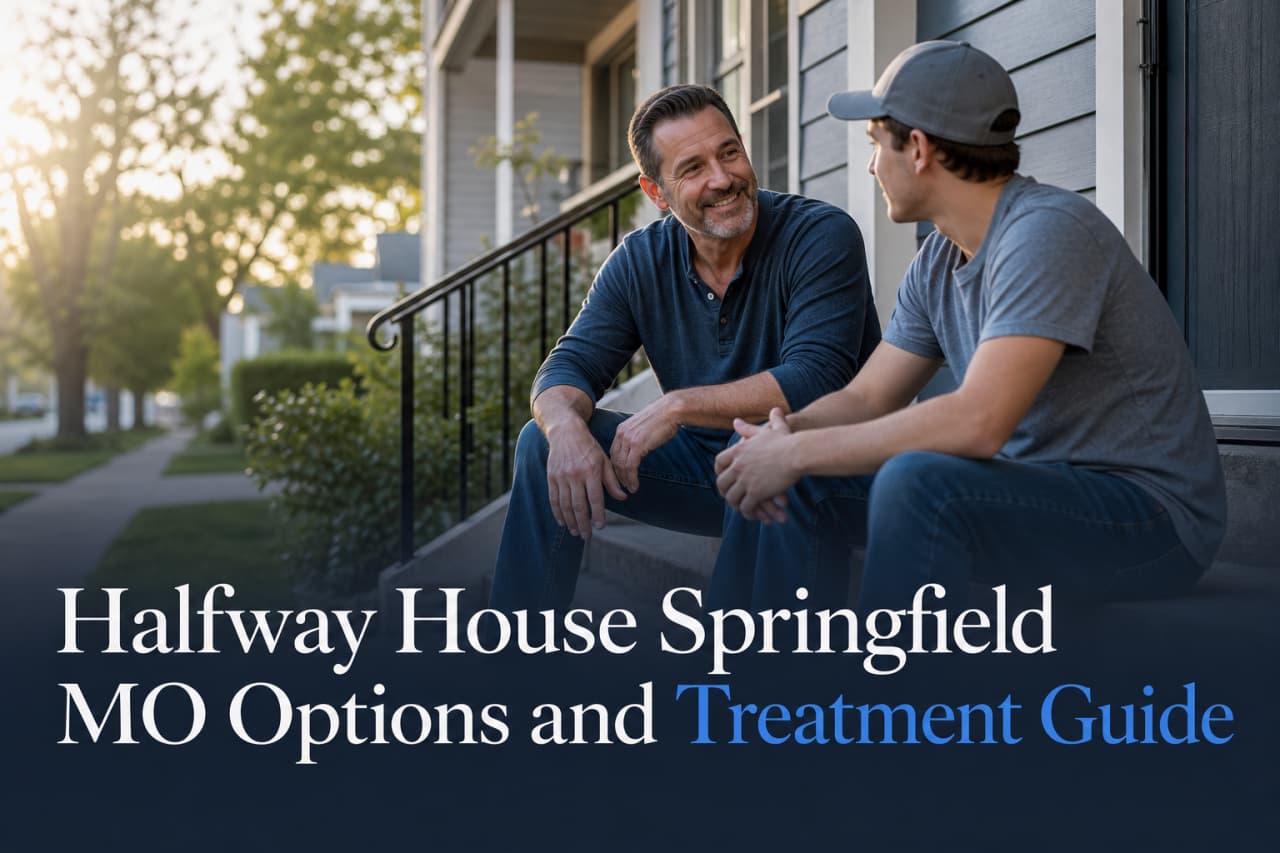
Compare halfway houses, sober living, and recovery housing in Springfield, plus how housing can work with outpatient treatment.
Missouri Behavioral Health does not operate recovery housing. People who search for a halfway house Springfield MO often need two separate things at once: a place to live and clinical care. That search phrase can lead to recovery housing, sober living, or a criminal-justice reentry setting. Entry rules, supervision, and on-site services are not the same across those models.
We provide structured outpatient treatment at our Springfield campus and through telehealth across Missouri. A qualified professional assesses whether Partial Hospitalization Program (PHP), Intensive Outpatient Program (IOP), or standard outpatient care fits the clinical picture.
What the Halfway House Label Can Mean
Treat the label as a starting point only. “Halfway house” is a broad phrase. It does not tell you who runs the property, why residents live there, or what services sit on site.
In the federal corrections system, the Bureau of Prisons uses the term Residential Reentry Center for facilities that help people leave incarceration. Many people still call those facilities halfway houses. The Bureau of Prisons describes Residential Reentry Centers inside that reentry context.
Outside the justice system, people may use “halfway house” for a substance-free home where residents support one another and follow shared rules. That home might call itself sober living, transitional housing, or recovery housing. The name alone will not confirm the model.
Ask the operator to define the residence in plain terms. Find out who can enter, whether a referral is required, what supervision is present, and which services are provided on site. Because Missouri Behavioral Health does not run housing, you may need separate agreements with a residence and our outpatient program.
Sober Living and Recovery Housing Terminology
Recovery housing is the clearest umbrella term for a substance-free living setting built around recovery support. The Substance Abuse and Mental Health Services Administration explains the model and recommended operating practices in its Best Practices for Recovery Housing publication.
Sober living usually means a shared residence for people in recovery. Residents may follow curfews, attend house meetings, complete chores, submit to substance testing, or meet work and treatment expectations. Each operator sets its own policies, so read the written rules before you pay.
| Term | What it usually describes | What to verify |
|---|---|---|
| Halfway house | A transitional residence that may involve recovery support, justice-system reentry, or both | Referral source, legal supervision, house rules, and clinical services |
| Sober living | A substance-free shared home for people in recovery | Staffing, medication policy, testing, curfew, fees, and discharge rules |
| Recovery housing | An umbrella term for housing built around substance-free living and recovery support | Operating standards, peer support, grievance process, and resident rights |
Clinical treatment is a separate service. Missouri Behavioral Health provides PHP, IOP, and standard outpatient care for mental health conditions, substance use disorders, and co-occurring disorders.
Labels can mislead.
How to Compare Halfway House Springfield MO Options
Confirm current openings first, then screen each residence before you pay a deposit. Availability, rules, and charges shift. An old directory listing cannot reserve a bed or prove a home fits your needs.
The Missouri Department of Mental Health posts state behavioral health information and recovery resources. You can also ask a treatment provider, a local recovery organization, or each residence directly for current Springfield options. Verify every referral yourself.
Ask who operates the residence and which outside standards it follows. Request written resident rights, grievance procedures, and discharge policies. Review the daily rules next, including curfews, visitors, overnight passes, employment requirements, house meetings, chores, and substance testing. Discuss prescribed medication before moving in, and ask how the home handles storage and access, including medications used to treat opioid use disorder. Request every charge in writing: the move-in payment, recurring rate, deposit, testing fees, transportation costs, refund terms, and late-payment consequences. Ask how the residence responds to medical or behavioral emergencies, who is present overnight, and what training staff members receive.
Location matters if you plan to attend treatment in person. Missouri Behavioral Health’s Springfield campus is at 2942 E Battlefield Road, Springfield, Missouri 65804. Check the real travel time from a prospective residence and ask how you will reach scheduled sessions.
Telehealth may cut transportation barriers for people living elsewhere in Missouri. You still need a private place, a reliable connection, permission under the residence’s rules, and clinical approval for virtual outpatient treatment.
How Housing Pairs With Outpatient Treatment
A stable residence can make it easier to keep scheduled care and practice recovery skills between sessions. The residence handles housing expectations. Your clinical provider develops and manages the treatment plan.
Missouri Behavioral Health offers PHP, IOP, and standard outpatient care. Plans are built around clinical need and may include therapy with a strong evidence base, medical oversight, medication management, group support, or family involvement when that fits the case.
Ask both organizations how their schedules line up. A residence may set curfews, employment hours, required meetings, or transportation limits. Your outpatient program will have its own attendance and participation rules.
Housing and treatment solve different problems.
An assessment by a qualified professional sets the diagnosis and level of care. A housing operator’s acceptance decision does not prove outpatient treatment is clinically appropriate, and admission to treatment does not reserve housing.
When Medical or Residential Care May Be Needed
Choose a setting with medical capacity if you may need withdrawal management, continuous supervision, or hospital-level care. Do not assume a recovery residence has medical staff or can manage severe symptoms.
Detoxification, residential treatment, and inpatient hospitalization go beyond Missouri Behavioral Health’s confirmed outpatient levels. A person with severe withdrawal, psychosis, overdose symptoms, or immediate danger needs prompt evaluation, not placement based only on housing availability.
Someone who needs 24-hour monitoring may need a higher level of care before moving into recovery housing. A qualified professional should make that call after an assessment.
If you or someone else is in immediate danger, call 911. For 24/7 mental health or suicide crisis support, call or text 988 to reach the [988 Suicide & Crisis Lifeline](https://988lifeline.org/).
How to Plan for Costs and Insurance
Get separate written financial answers for housing and treatment. Missouri Behavioral Health does not operate the residence, so each organization must explain its own charges, payment schedule, and cancellation terms.
Ask the housing operator for the total amount due before move-in and the recurring payment after that. Request details on deposits, refunds, testing charges, transportation, food, utilities, and missed-payment policies. If you are paying privately, compare the full expected cost rather than the advertised weekly or monthly rate alone.
Insurance coverage and out-of-pocket costs for clinical treatment depend on your plan and benefits. Missouri Behavioral Health offers insurance verification for its outpatient services. That check does not establish coverage for a separately operated halfway house, sober-living home, or recovery residence.
Same-day admissions are sometimes available, but availability, benefits, and clinical fit must be confirmed for each person. Admissions support runs 24/7.
Put every promise in writing.
What People Want to Know
Does Missouri Behavioral Health operate a halfway house?
No. Missouri Behavioral Health does not operate recovery housing, sober living, or a halfway house. We provide structured outpatient treatment at our Springfield campus and through telehealth across Missouri.
Are a halfway house and sober living the same thing?
They are not always the same. “Halfway house” may describe a reentry facility or a recovery-focused residence, while sober living usually means substance-free shared housing for people in recovery. Ask the operator to define its model.
Can I attend outpatient treatment while living in recovery housing?
You may be able to pair recovery housing with outpatient treatment if the residence permits it and an assessment supports that level of care. Missouri Behavioral Health offers PHP, IOP, and standard outpatient services.
Does insurance pay for sober living or a halfway house?
Coverage must be checked separately for housing and clinical treatment. Missouri Behavioral Health can verify benefits for its outpatient services, but the residence must explain its charges and any payment arrangements.
How do I find current recovery housing options in Springfield?
Use current state resources, local recovery organizations, and direct calls to residence operators. Confirm openings, entry requirements, rules, charges, and the property address before sending money.
Can I use telehealth while living in sober housing?
Telehealth is available through Missouri Behavioral Health across Missouri, subject to clinical fit. Ask the residence whether you will have the privacy, internet access, and schedule needed to attend virtual sessions.
Talk With Our Admissions Team
Missouri Behavioral Health can discuss outpatient treatment options and explain how PHP, IOP, or standard outpatient care may fit alongside separately operated recovery housing. A call does not create a provider-patient relationship or guarantee admission.
Call Missouri Behavioral Health at 417-771-5305 for a confidential conversation about treatment options or to verify insurance benefits. Admissions support is available 24/7.
About the author
Missouri Behavioral Health
Editorial Team
Helpful educational resources from Missouri Behavioral Health.