You'll see who's at risk for dangerous withdrawal, what the first few days can look like, and how medical detox or a supervised taper fits before outpatient treatment.
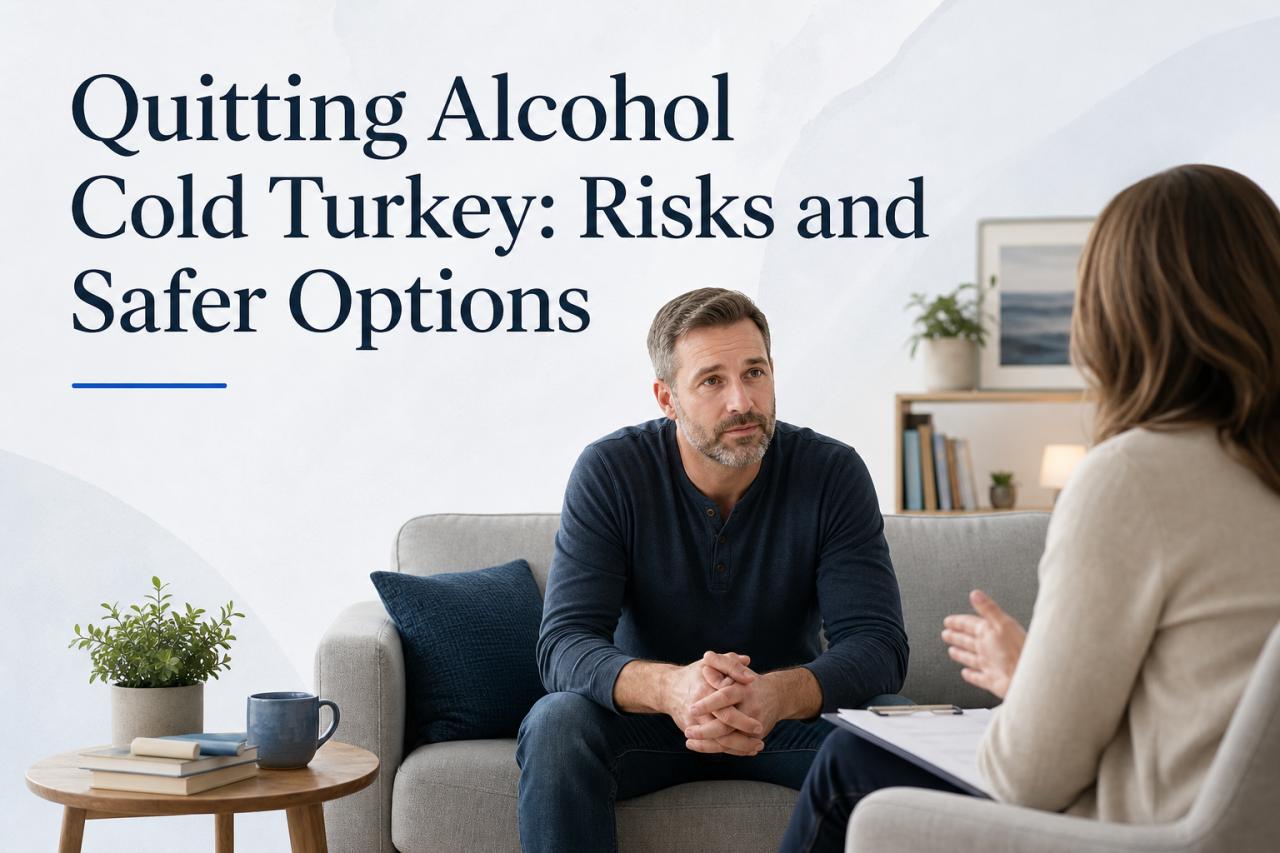
Quitting alcohol cold turkey after heavy, long-term drinking can be life-threatening, because sudden withdrawal may cause seizures, confusion, and a racing heart. If you've been drinking daily for weeks or longer, talk with a doctor before you stop. Medical supervision makes withdrawal much safer (source) (source).
If you or someone else is in immediate danger, call 911. For 24/7 mental health or suicide crisis support, call or text 988 to reach the 988 Suicide & Crisis Lifeline.
Quitting Alcohol Cold Turkey and Why It Can Be Dangerous
Going cold turkey means stopping all alcohol at once, without a taper or medical help. After regular heavy drinking, that sudden stop can be the riskiest way to do it (source) (source).
The National Institute on Alcohol Abuse and Alcoholism has a resource on alcohol withdrawal for health professionals. How serious withdrawal gets varies from person to person.
You can't predict your reaction by how you feel on a normal day. Ask a doctor before you stop, not after symptoms start (source).
A call to your doctor's office or a telehealth provider is a good way to begin. It helps to have a few details ready, including how many drinks you have on a typical day and for how long, any past withdrawal symptoms such as shaking, sweating, or seizures, and your other health conditions and medications.
Missouri Behavioral Health doesn't provide medical detox, but our admissions team can talk through where to find it and how outpatient care fits in afterward. A doctor can then decide whether you need medically managed withdrawal or a supervised taper.
Alcohol Withdrawal Symptoms and Timeline
Withdrawal usually starts within hours of the last drink, and the first signs are easy to mistake for a bad hangover. You may notice shaky hands, sweating, nausea, a faster heart rate, trouble sleeping, and a jittery, anxious feeling that doesn't ease with rest (source).
Moderate withdrawal can add vomiting, headache, high blood pressure, and sharper anxiety. Severe withdrawal can bring seizures, confusion, hallucinations, and a high fever, and those signs mean it's time for emergency care, not waiting it out (source).
Withdrawal unfolds over days, and symptoms can worsen as it goes. Your own timing can run faster or slower depending on how much you drink and your health history, so ask a doctor where you stand (source).
Because severe symptoms can arrive suddenly, you shouldn't go through withdrawal alone. If you're helping a family member, watch for confusion, trouble staying awake, or seeing things that aren't there. Tell the doctor or emergency staff exactly when the last drink happened, since that helps them judge where the person is in the timeline.
Seizures, Delirium Tremens, and When to Get Emergency Help
Withdrawal seizures are often the earliest life-threatening complication, and they can strike with little warning within the first day or two after the last drink. A person may fall, lose consciousness, and shake uncontrollably for a short time. Even if it stops on its own, it needs emergency evaluation, because one seizure can be followed by another (source).
Delirium tremens is rarer but more dangerous, and it typically shows up a few days in. The person may not know where they are, may see or hear things that aren't there, and may run a fever, sweat heavily, and have a pounding heart. That's why hospital-level care matters (source) (source).
When to Go to the ER
Get emergency help right away for any of these, and don't wait to see if they pass: (source)
A seizure, even a brief one (source)
Confusion, disorientation, or not recognizing familiar people (source)
Hallucinations, such as seeing insects or hearing voices (source)
A high fever with drenching sweats and a racing heart (source)
Repeated vomiting that keeps the person from holding down fluids
Trouble staying awake or waking the person up
If you're with someone having a seizure, stay with them, move hard objects out of the way, and turn them gently onto their side. Don't put anything in their mouth. Note the time it started and when they last drank, then give that to the paramedics.
Emergency staff can treat withdrawal with medication and monitoring, and they'll decide whether the person needs admission. After the immediate danger has passed, we can talk with you at Missouri Behavioral Health about how outpatient treatment could continue once a medical team has cleared the person to step down.
Who Is at Highest Risk of Dangerous Withdrawal
The strongest predictor of dangerous withdrawal is what your body has already been through, so start with your drinking history. Daily drinking over weeks or months raises the risk. So does any past withdrawal episode, and a past withdrawal seizure or delirium tremens is the clearest warning. Each round of withdrawal can make the next one harder on the nervous system, which clinicians call kindling (source).
Several other factors push the risk higher, and a doctor will want to hear about all of them:
Drinking heavily every day, especially if you wake up needing a drink to steady your hands
Earlier withdrawal that involved seizures, confusion, or hallucinations
Heart, liver, or blood pressure problems, or other health conditions that withdrawal can strain
Being older, since the body handles the stress of withdrawal less easily
Using sedatives or other substances along with alcohol
Poor nutrition, which can leave you more vulnerable to complications
Binge drinking is a gray area. A person who drinks heavily only on weekends may have a lower risk than a daily drinker, but heavy binges can still cause withdrawal symptoms in some people. If you've felt shaky, sweaty, or anxious between binges, check with a doctor first.
Mental health matters here too. Anxiety, depression, and trauma can intensify how withdrawal feels, and they're easy to overlook when the physical symptoms get most of the attention. Tell your doctor about any co-occurring mental health conditions and the medications you take for them (source).
If you can't say with confidence that your risk is low, assume it isn't. A doctor can assess you in a single visit and tell you whether you can taper at home with supervision or need medically managed withdrawal. When it's time to build a plan for after withdrawal, our team can help you sort out the next steps and verify your insurance before you decide.
Medical Detox, a Supervised Taper, and Outpatient Treatment Afterward
A doctor usually picks between two routes, and the choice depends on the risk factors you just read about. Medical detox means a clinical team monitors you around the clock, treats symptoms with medication, and checks your vital signs as withdrawal unfolds. A doctor-supervised taper means you lower your drinking on a set schedule at home, with check-ins and a plan for what to do if symptoms get worse (source).
Missouri Behavioral Health doesn't provide medical detox or inpatient care, so we'll refer you to a program that does. Our Springfield detox guide explains what to look for and how to find it. If you'd like to see what comes next, our alcohol rehab center in Missouri page describes our approach.
Once a medical team says you're stable, we offer three levels of outpatient care, in person in Springfield or by telehealth:
Partial Hospitalization Program (PHP), the most structured option
Intensive Outpatient Program (IOP), typically planned at 9 to 15 hours per week
Standard outpatient care, for people who need less weekly time
We confirm your actual days and hours after an assessment, and the assessment also determines which level fits you. Therapy at our programs is trauma-informed and attachment-focused, and it can address anxiety or depression that were part of the drinking.
Coverage depends on your plan, and we don't accept Medicaid or Medicare. Call Missouri Behavioral Health at 417-771-5305 for a confidential conversation about treatment options or to verify your insurance benefits, or use our insurance verification page to check your benefits.
Common Questions
Can withdrawal happen after only a few weeks of daily drinking?
Yes, withdrawal can begin after a few weeks of daily drinking, though the risk generally rises the longer and heavier the pattern runs. There's no safe cutoff you can calculate at home. If you've been drinking every day and feel shaky or anxious when the alcohol wears off, tell a doctor before you stop.
Can I start IOP while I'm still drinking?
Ask the program directly, because the answer depends on your assessment and your withdrawal risk. If you're drinking daily, a doctor should clear you for withdrawal first. After that, our Intensive Outpatient Program can begin once an assessment confirms it fits. Call us and we'll explain how admissions works for someone who's still drinking.
What questions should I ask my doctor before I stop drinking?
Ask whether your drinking pattern puts you at risk for seizures or delirium tremens, and whether you need medical detox or a supervised taper. Also ask which medications are safe with your health conditions, what symptoms should send you to the ER, and who can stay with you. Bring your last-drink timing and a medication list.
What should I do in the weeks after detox to avoid relapse?
Line up ongoing treatment before detox ends, because cravings and poor sleep often continue after the physical symptoms ease. Structured therapy, a plan for high-risk situations, and people who know you're in recovery all help. Tell your care team about anxiety or low mood early, since treating those can make cravings easier to manage.
About the author
Missouri Behavioral Health
Editorial Team
Helpful educational resources from Missouri Behavioral Health.